
The best sauna heater for most home saunas is an electric or wood-fired heater. A propane or natural gas sauna heater is a strong third choice when you want gas convenience without an electric supply. Every type heats the room and the rocks that make steam. Still, they differ in cost, heat quality, upkeep and where you can install them. So this guide compares electric, wood-fired and propane or gas sauna heaters. By the end, you will know which one fits your home and your budget.
What are the main types of sauna heater?
Every traditional sauna needs a heater to warm the air. It also heats a bed of sauna rocks that create steam. People sometimes call this heater a sauna stove. In practice, you have four heat sources to choose from. The right one depends on where you live and how you plan to use your sauna:
- Electric sauna heaters are the most popular for indoor and city saunas. People love them for convenience and safety.
- Wood-fired sauna heaters give a classic, off-grid experience with deep, radiant heat.
- Propane and natural gas sauna heaters offer gas convenience where power is limited or costly.
- Infrared heaters warm your body directly at a lower temperature. However, they feel different from a true sauna.
How does a propane or gas sauna heater work?
A propane sauna heater burns liquefied petroleum gas, or LPG, from a tank. A natural gas sauna heater runs off a mains gas line instead. In both cases, the burner heats a bed of rocks, just like an electric or wood heater. So you still get dry heat and a burst of steam, called loyly, when you pour water on the hot rocks.
The appeal is simple. A gas or propane sauna stove gives you comfortable, controllable heat. Yet it needs no heavy electric circuit and no firewood to split or store. As a result, a propane sauna suits larger rooms, rural properties and cabins. In those places, a big electric circuit is hard to run. A propane tank, on the other hand, is easy to keep on hand.
The trade-offs are real, however. A gas sauna heater costs more up front than a basic electric model. It also needs to vent to the outside, because it produces combustion gases. On top of that, it must meet local gas and building codes. Where you meet those conditions, though, a propane heated sauna can run efficiently. This is especially true if you already use propane on the property.
Electric sauna heaters
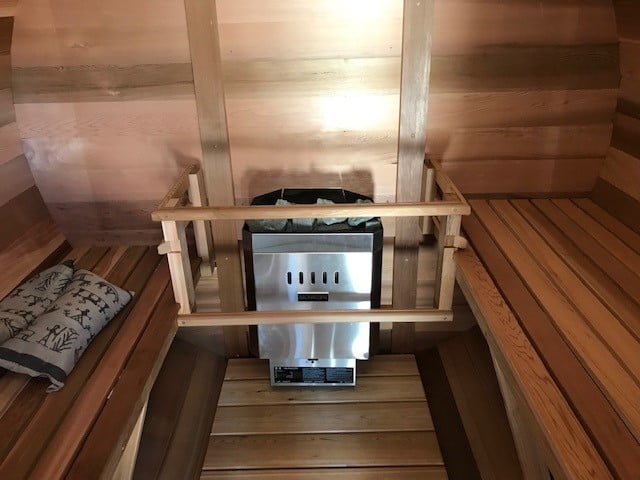
An electric sauna heater is the default choice for most home saunas. It heats the room and rocks precisely and on demand. Better still, you buy no fuel and clean no ash. You simply flip a switch or set a timer, and the sauna warms up.
Electric heaters are also the safest option. A quality unit shuts itself off during a power cut or a fault. A wooden rail guards the hot element, and the wiring hides behind the cedar walls. In addition, these heaters come in many sizes, with mechanical or digital controls. The one requirement is a suitable electric supply, since larger heaters need their own circuit. In short, an electric heater fits almost any room. Northern Lights offers a full range of electric sauna heaters to match yours.
Wood-fired sauna heaters
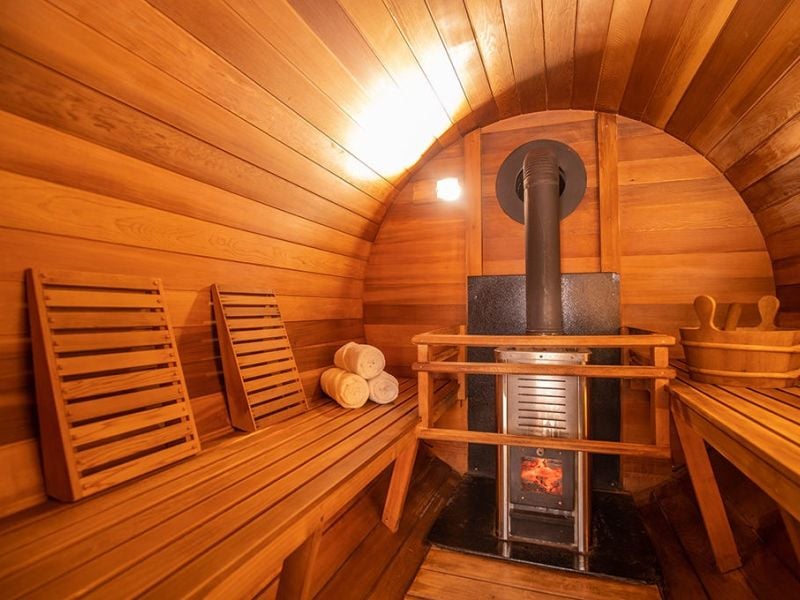
A wood-fired sauna heater delivers the most traditional experience of all. You get the crackle of the fire, deep radiant heat and the smell of a real wood sauna. Wood heaters suit off-grid sites and anywhere firewood is cheap. Better yet, they keep working when the power goes out. They also heat larger saunas well, such as those built for six or more people.
The trade-offs are the effort and the rules, though. You need to buy and store dry wood. The stove also takes longer to heat up, and it needs tending. Finally, a wood-burning heater requires a proper chimney and must meet local building and insurance codes. For a closer look at your options, see our guide to choosing the right sauna stove.
Propane and natural gas sauna heaters
Propane and natural gas sauna heaters sit between electric and wood. In short, they give you gas-powered convenience with strong, comfortable heat.
Propane sauna heaters
A propane sauna heater is popular on rural and off-grid properties. You can refill a propane tank easily, and it does not depend on the grid. That is why people search for a propane sauna stove or an LPG sauna heater when a big electric circuit is not practical. This heater also runs cleaner than a wood stove. You split no firewood, and you sweep no ash.
Natural gas sauna heaters
A natural gas sauna heater makes sense if your home already has a mains gas line. In that case, you never refill a tank. Both gas options can run efficiently over time, even though they cost more up front than a basic electric unit. Remember one rule, though. Any gas or propane sauna heater must vent to the outside and meet code, because it burns fuel inside the room.
| Heater type | Heat quality | Running cost | Upkeep | Best for |
|---|---|---|---|---|
| Electric | Clean, precise, on demand | Low to moderate | Very low | Indoor and city saunas |
| Wood-fired | Deep, radiant, traditional | Low where wood is cheap | Higher (fuel, ash, chimney) | Off-grid and large saunas |
| Propane / gas | Strong, comfortable, controllable | Moderate, efficient over time | Moderate (venting, tank or line) | Rural sites and gas homes |
| Infrared | Radiant, lower temperature | Low | Low | Gentle, low-heat sessions |
Which sauna heater is best for you?
The best sauna heater is the one that fits your space, your energy supply and your habits. Use these scenarios as a quick guide:
- Indoor or city sauna: choose an electric heater for convenience, safety and clean running.
- Off-grid or rural cabin: a wood-fired heater or a propane sauna heater both work without the grid. Pick wood for tradition, or propane for less effort.
- Large or commercial sauna: a big wood or gas heater holds temperature better than a small electric unit.
- You want gas convenience and have a supply: a natural gas or propane heated sauna gives easy heat with no firewood.
- You prefer gentler, lower heat: consider a carbon-fiber infrared heater. Keep in mind, though, that it does not make steam.
How do you size a sauna heater?
Sizing matters more than the brand. A heater that is too small runs flat out and never feels hot enough. One that is too large wastes energy and overheats a small room. So size the heater to the volume of your sauna, meaning length times width times height. Then add capacity for uninsulated walls, glass doors and outdoor exposure, because they all shed heat.
As a rule of thumb, a well-insulated cedar room needs about 1 kilowatt of electric output per 45 to 50 cubic feet. Makers rate gas heaters in BTU for the same job. Always check the sizing chart for your model, though. Our sauna heater sizing chart walks you through it, and our team can match a heater to your room.
Do not forget the rocks
Whichever heat source you choose, the rocks on top matter. Good sauna rocks store the heat and let you make steam on demand. You simply pour water over them. Poor or worn rocks give weak, damp steam, and they can clog the heater. So use dense, purpose-made stones, and re-stack them once a year. Electric, wood and gas heaters all use rocks. Only infrared cabins skip them, which is why they make no loyly steam.
Safety and installation
Each heat source has its own safety rules. A qualified gas fitter should vent and install any propane or gas sauna heater to local code, with a carbon monoxide detector nearby. A wood-fired heater needs a proper chimney and safe clearances. An electrician should wire an electric heater on a suitable circuit.
On every type, keep flammable items away from the hot heater. In a family sauna, add a guard rail as well. Also make sure the room breathes, so fresh air reaches the heater. In short, careful installation protects your home and extends the life of the heater.
Where can you buy a sauna heater?
Ready to shop? You can buy your heater directly from Northern Lights. Most home saunas run on electric or wood-fired heat, and we stock both. For everyday convenience, browse our electric sauna heaters. For off-grid or traditional heat, see our wood-fired sauna heaters instead. You can also compare every model on our main sauna heaters page. For gentler, lower-temperature sessions, view our infrared sauna heaters as well.
What we recommend at Northern Lights
Northern Lights Cedar Saunas focuses on electric and wood-fired heaters. These two types suit the vast majority of home saunas. We build our cedar barrel saunas and outdoor saunas to pair with them perfectly.
So which should you pick? If you value convenience, an electric heater is usually the best sauna heater for you. If you love the ritual and have the fuel, a wood-fired heater is hard to beat. A propane or natural gas sauna heater also works for off-grid or gas-supplied homes, as long as you vent and install it properly. Whatever you choose, pair it with a well-built cedar room to enjoy the full benefits of a sauna. Call us at 1-800-759-8990 or 1-204-977-1674, and we will gladly help.
Frequently asked questions about sauna heaters
What is the best sauna heater?
For most home saunas, the best sauna heater is an electric model. It wins on convenience, safety and clean running. Wood-fired heaters are best for off-grid and traditional use. Propane or gas heaters suit properties without a strong electric supply.
Is a propane sauna heater worth it?
A propane sauna heater is worth it if you want gas convenience without an electric circuit, for example on a rural or off-grid property. The upfront cost is higher than a basic electric unit. Still, it avoids firewood and can run efficiently, especially if you already use propane.
Can you use a propane heater in a sauna?
Yes, as long as it is a sauna heater built for gas. A qualified fitter must vent it to the outside and install it to local code. Never use an unvented gas heater in a sauna, because it produces combustion gases that must leave the room safely.
What is the difference between propane and natural gas sauna heaters?
A propane sauna heater runs off LPG from a refillable tank, so it works anywhere. A natural gas sauna heater connects to a mains gas line and never needs refilling. In short, natural gas suits homes with a gas connection, while propane suits rural and off-grid sites.
Are electric or wood sauna heaters better?
Neither is universally better. Electric heaters are more convenient and safer, and they suit indoor and city saunas. Wood-fired heaters give a deeper, traditional heat and work off-grid. So choose based on your location, your supply and how often you will use the sauna.
How many BTU does a sauna heater need?
Makers rate gas sauna heaters in BTU and electric heaters in kilowatts for the same job. Size the heater to the room volume. Then add capacity for uninsulated walls, glass and outdoor exposure, and follow the maker sizing chart for your model.
Do gas sauna heaters need venting?
Yes. Any propane or natural gas sauna heater burns fuel and produces combustion gases. Therefore it must vent to the outside and meet code, with a carbon monoxide detector nearby. This is a job for a qualified gas fitter.
Is an electric sauna heater safe?
Yes. A quality electric sauna heater shuts off automatically during a power cut or fault. A rail guards the element, and the wiring hides behind the cedar walls. An electrician must wire it on a suitable circuit.
What size sauna heater do I need?
Size the heater to the volume of your sauna. As a rule, a well-insulated cedar room needs roughly 1 kilowatt of electric output per 45 to 50 cubic feet. Add more for glass, uninsulated walls or outdoor exposure, and always check the maker sizing chart.
How much does it cost to run a sauna heater?
Running cost depends on the fuel and how often you use the sauna. Electric is low to moderate. Wood is cheap where firewood is plentiful. Propane or gas is moderate but efficient over time. In every case, a well-insulated cedar room keeps costs down.
Do all sauna heaters use rocks?
Electric, wood and gas sauna heaters all use rocks to store heat and create steam. Infrared heaters do not, because they warm your body directly rather than the rocks. As a result, an infrared cabin makes no loyly steam.
Ready to choose your sauna heater?
Northern Lights Cedar Saunas stocks electric, wood-fired, infrared and commercial sauna heaters, sized to your room and ready to ship.