
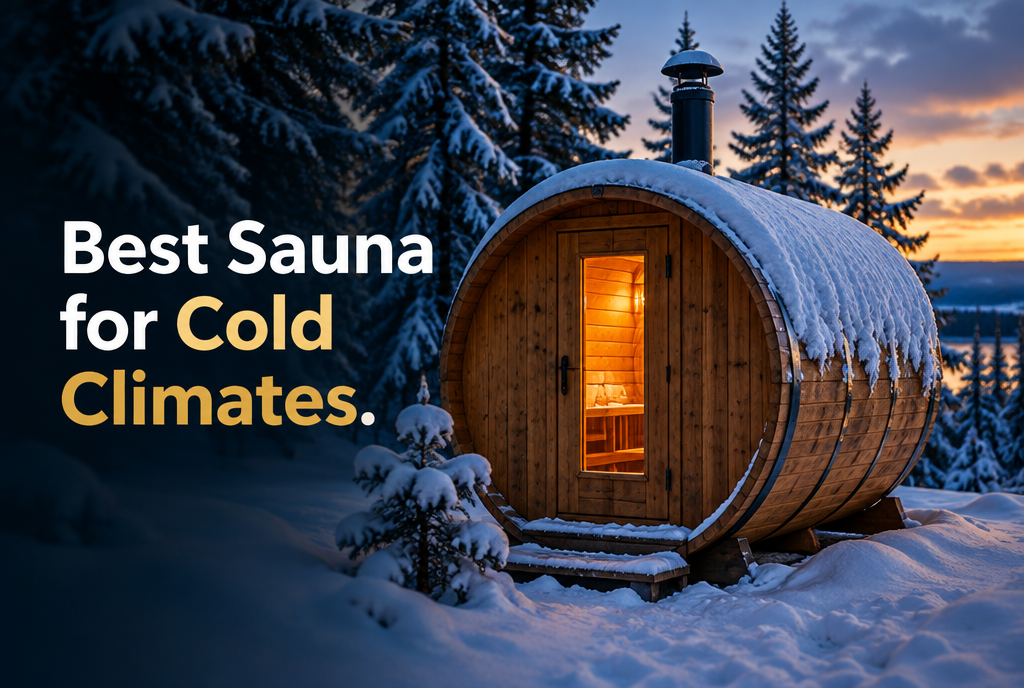
The best outdoor sauna for a cold climate is one with insulated walls or thick cedar staves, a sealed door, a roof rated for snow load, and a heater sized 20 to 30 percent above a mild weather chart. Barrel and insulated cabin saunas in western red cedar both work well through a Canadian winter. Cedar resists moisture, and the right heater still reaches full heat on a freezing night.
What is the best outdoor sauna for a cold climate
We build and ship saunas into some of the coldest corners of North America, so this question lands in our inbox every fall. For a cold climate the best outdoor sauna is a well sealed, well insulated room paired with a heater that has headroom to spare. In practice that means a western red cedar barrel or an insulated cedar cabin. A barrel sheds snow on its own and heats fast because the curved shape moves hot air in a tight loop. A cabin holds heat a little longer once it is up to temperature and gives you more room to stretch out. Both live on our outdoor saunas page, and both hold up in real winters. If you want the plain version, pick cedar, insist on a sealed door, and do not skimp on the heater.
Do outdoor saunas work in winter
Yes, and winter is when a lot of owners use them most. An outdoor sauna is designed for exactly this, a hot cedar room a few steps from a snowbank. The cold outside is part of the appeal, because the contrast between 175 F inside and a frozen yard is the whole ritual. What changes in winter is the physics of getting there. Cold air pulls heat through the walls, ceiling, and door for the entire session, not just at startup, so the heater works harder the whole time. That is why insulation, a tight door, and an honestly sized heater matter more the colder it gets. Get those three right and the sauna reaches full heat and holds it, whether the evening is a mild 40 F or minus 20 F in January.
Which sauna is best for Canadian winters
For Canadian winters we keep coming back to two designs, the cedar barrel and the insulated cedar cabin. The barrel is the classic choice across the Prairies and Ontario for good reason. Its round shape has less surface area than a boxy room of the same volume, so there is less wall for the cold to attack, and snow slides off the curve instead of piling on top. If you are new to the shape, our primer on what barrel saunas are covers the basics. Cabins win when you want a changing area, a bigger bench layout, or a low ceiling that heats even faster. We see plenty of both in places like Manitoba and Minnesota, and our field notes on a barrel sauna in MN walk through how one holds up over a full season. If you are weighing the two shapes, our guide to barrel sauna vs cabin sauna lays out the differences side by side.
What features make a sauna ready for a snowy climate
A sauna that shrugs off a snowy climate comes down to five things we check on every build. None of them are exotic. Together they are the difference between a room that reaches 170 F on a cold night and one that stalls at 140 F while the elements glow red.
| Feature | What to look for | Why it matters in the cold |
|---|---|---|
| Wall and ceiling insulation | Insulated cabin walls or thick cedar barrel staves, with a foil vapor barrier where the design allows | Stops heat bleeding into freezing air, so the room holds temperature and the heater is not fighting all session |
| Snow-load roof | A roof rated for your local snow load, or a barrel shape that sheds snow on its own | Wet snow is heavy, and an unrated flat roof can sag or fail after a big storm |
| Sealed door | A tight door with good gaskets and a frame that stays square in the cold | A drafty door dumps heat and lets cold air pool at the floor, the worst place to sit |
| Oversized heater | A heater sized 20 to 30 percent above a mild-climate chart | Covers the heat lost through walls and door so you still reach 170 F on a bitter night |
| Cedar moisture resistance | Western red cedar staves and interior boards | Cedar resists rot and handles the humidity and freezing that warp or check lesser wood |
The cedar part is not marketing. Western red cedar is naturally rot resistant and stays stable through big humidity swings, which is why we use it inside and out. For the detail on why the wood matters, read our notes on cedar for saunas and the difference between clear cedar vs knotty cedar.
Do I need to insulate an outdoor sauna
In a cold climate, yes, insulate it. A barrel gets away with less because the thick staves and small surface area do a lot of the work, though even a barrel benefits from an insulated door and a snug fit at the bands. A cabin sauna in a northern winter really should have insulated walls and ceiling behind a foil vapor barrier, because a single wall box bleeds heat faster than the heater can replace it. Insulation is not only about reaching temperature, it is about holding it without running the heater flat out, which trims your cost every session. Once the room is built, keeping the wood sealed and dry helps too, and our guide on how to maintain your sauna room covers the seasonal basics.
How much bigger should the heater be for a cold climate
Here is the rule we give every cold climate buyer. Take the heater size a normal chart recommends for your room volume, then add 20 to 30 percent. A standard electric heater is rated at roughly 1 kW for every 45 to 50 cubic feet of room in mild conditions. Outdoors in a real winter, that same room needs the extra capacity because heat leaks out the entire session. So a room a warm weather chart pegs at 6 kW is better served by a 7.5 to 8 kW heater up north. When you land between two sizes, always size up. An oversized heater simply idles on its thermostat once the room is hot, and the running cost difference at the same target temperature is small. An undersized heater never gets there on the coldest nights. Work the numbers with our sauna heater sizing chart, compare fuels on our take on the best sauna heater in electric, wood, or propane, and if you are still deciding on output, our sibling guide on what size sauna heater you need goes deeper on the kW math.
Will a barrel sauna heat up in freezing weather
It will, it just takes longer than the glossy 20 minute claims you see in summer marketing. A properly sized heater in an insulated cedar sauna reaches bathing temperature even from a frozen start, because the heater and the stones are climbing from zero against the cold. The colder the air, the longer the climb, and the more an oversized heater earns its keep. Here is what we tell owners to expect from a well built, well sized outdoor sauna.
| Outdoor temperature | Approximate heat-up time | What to plan for |
|---|---|---|
| 50 F (10 C) and warmer | 25 to 35 minutes | Close to ideal, an easy start |
| 32 F (0 C) | 35 to 45 minutes | Stones start cold, give it time |
| 14 F (minus 10 C) | 45 to 55 minutes | Preheat before you undress |
| minus 4 F (minus 20 C) | 55 to 70 minutes | The oversized heater earns its keep |
| minus 22 F (minus 30 C) and colder | 70 to 90 minutes | Wood-fired stoves sit at the long end |
These are honest ranges for a 4 to 6 person room. A smaller two person barrel warms faster, a big cabin with a change room takes longer, and a wood-fired stove sits at the slower end because you are building and feeding a fire rather than flipping a switch. Plan the preheat, and on the worst nights start the heater before you head out to shovel the path.
What does a cold climate outdoor sauna cost
Prices move with cedar supply and heater choice, so treat any figure as a range. Across the North American market in 2026, a cedar barrel sauna generally runs from around 5,000 dollars for a compact two person model up to 15,000 dollars or more for a larger unit with a change room and a premium heater. Insulated cabins overlap that range and climb higher with size and finish. A cold climate build also means budgeting for the bigger heater and, on electric models, the correct wiring. We do not post live figures in a blog post because they shift, so check current numbers on our sauna prices page, and if you are spreading the cost out, our notes on financing an outdoor sauna cover the options. For the bigger picture on whether the whole thing pays off, our pillar post on whether a home sauna is worth it is a good next read, and if you would rather assemble your own, browse our barrel sauna kits.
Frequently asked questions
Do outdoor saunas work in winter
Yes. Outdoor saunas are built for winter, and many owners use them most in the cold months. The heater works harder because cold air pulls heat through the walls and door all session, so a sealed, insulated room with an oversized heater still reaches full temperature and holds it on freezing nights.
Do I need to insulate an outdoor sauna
In a cold climate, yes. A cedar barrel gets by on its thick staves and small surface area, but a cabin sauna should have insulated walls and ceiling behind a foil vapor barrier. Insulation helps the room reach temperature and, just as important, hold it without running the heater flat out.
How much bigger should the heater be for a cold climate
Take the size a standard chart gives for your room volume, then add 20 to 30 percent for an outdoor winter build. Heat leaks out the entire session, so the extra capacity keeps you at full temperature. When you fall between two heater sizes, always size up rather than down.
Will a barrel sauna heat up in freezing weather
Yes, it just takes longer than a summer start. With a properly sized heater, expect roughly 35 to 45 minutes near freezing and 55 to 70 minutes around minus 20 C. A barrel actually warms quickly for its size because the curved shape circulates hot air in a tight loop.
Which sauna is best for Canadian winters
A western red cedar barrel or an insulated cedar cabin. The barrel sheds snow and heats fast thanks to its round shape and small surface area. A cabin holds heat slightly longer and offers a changing area. Both perform well from the Prairies to the Maritimes with the right heater.
What is the best sauna for a snowy climate
One with a roof rated for snow load, or a barrel shape that sheds snow on its own. Add insulated walls, a sealed door, moisture resistant cedar, and an oversized heater. Those features together keep the room warm and the structure sound through repeated storms and thaws.
How long does an outdoor sauna take to heat up in winter
Plan on 35 to 45 minutes near freezing, 45 to 55 minutes around minus 10 C, and up to 70 minutes or more in deep cold below minus 20 C. Wood-fired stoves sit at the longer end. Starting the heater before you head outside makes the wait painless.
Can you leave an outdoor sauna out all winter
Yes, that is what they are made for. Western red cedar resists rot and handles the freezing and thawing cycles that would warp lesser wood. Keep the roof clear after heavy snow, make sure the door seals, and give the wood a seasonal check so it stays dry and tight.