
Using a sauna is simple. At Northern Lights Cedar Barrel Saunas we tell every first timer the same rhythm. Hydrate, warm up for a short round, cool down, then repeat two or three times and finish cool. Sit on a lower bench to start, keep early rounds around 10 minutes, drink water throughout, and step out any time you feel lightheaded rather than pushing through.
The heat does more than feel good. If you are curious about the payoff, we cover the wider benefits of saunas and the research behind sauna health benefits elsewhere. This guide is the practical part, how to actually run a session from your first sit to your last cool down.
How do you use a sauna for the first time
Your first session is about learning your own heat tolerance, not chasing a record. Give yourself an unhurried hour and treat it as a gentle introduction. Below is the exact rhythm we walk new owners through, laid out step by step so nothing about it feels like a guess.
| Step | What to do | Why it matters |
|---|---|---|
| Before | Drink a glass or two of water, take a quick shower, leave your phone outside, and let the heater bring the room up to temperature. | Starting hydrated and clean keeps the session comfortable and keeps skin oils and lotions off the cedar. |
| Warm up round | Sit on the lower bench for 8 to 12 minutes, breathe easy, and step out when you feel warm and flushed rather than pushing to your limit. | The first round teaches your body the heat, and the lower bench is gentler while you learn your tolerance. |
| Cool down | Step into fresh air or a cool shower for 5 to 10 minutes and let your heart rate settle and your skin cool. | Cooling between rounds is where much of the good feeling comes from, and it resets you for the next round. |
| Repeat | Go back in for a second and maybe third round, move up to the higher bench if you want more heat, and add a little water on the rocks. | Rounds build the experience gradually instead of one long overheated stretch. |
| Finish | Cool down fully, dry off, drink more water, and rest for a while before you carry on with your day. | Finishing cool and rehydrated is how you feel refreshed instead of drained. |
One maker note before your very first burn. A brand new cedar room needs a gentle break in bake so the fresh wood and the heater cure before you run a full hot session. We walk through that in our sauna break in procedure, and the good news is it only has to happen once.
How hot should a sauna be and how long should you stay in each round
A traditional sauna runs hot and dry. Once the room is fully heated, most people land somewhere between 150 and 195 F. Beginners do best on the cooler side of that with shorter rounds, then climb the ladder as the body adapts. Here is a quick reference for where to start and where you might end up.
| Sauna user | Temperature | Time per round | Rounds per session |
|---|---|---|---|
| Beginner | 150 to 165 F (65 to 74 C) | 8 to 12 minutes | 2 to 3 |
| Experienced | 175 to 195 F (80 to 90 C) | 15 to 20 minutes | 3 to 4 |
Regularity matters more than any single marathon session. A long term Finnish cohort study in JAMA Internal Medicine linked sauna use four to seven times a week with markedly lower cardiovascular and all cause mortality than using it once a week. You do not have to start there. If you are mapping out a routine, our guide on how often you should use a sauna breaks down a sensible weekly cadence.
What should you wear in a sauna
In a private home sauna most people go with a towel, either wrapped or sat on, and little else. If you are sharing the room or prefer more cover, a clean cotton towel or loose swimwear works fine. Skip anything you would not want soaked in sweat, and leave metal jewelry outside because it heats up fast against bare skin. Leave shoes at the door too. The one habit we always suggest is sitting on a towel rather than straight on the bench. It is more comfortable, it keeps the wood cleaner, and over the years it protects the cedar from sweat.
What should you do before and after a sauna
Before you get in, drink a glass or two of water, take a quick rinse in the shower, and avoid a heavy meal or alcohol right beforehand. Going in clean keeps skin oils and lotions off the benches, which the wood appreciates. After your last round, cool all the way down, dry off, and keep sipping water while your body settles. A short rest afterward is when the calm, loose feeling really lands, so try not to rush straight back into a busy afternoon.
Should you pour water on the sauna rocks
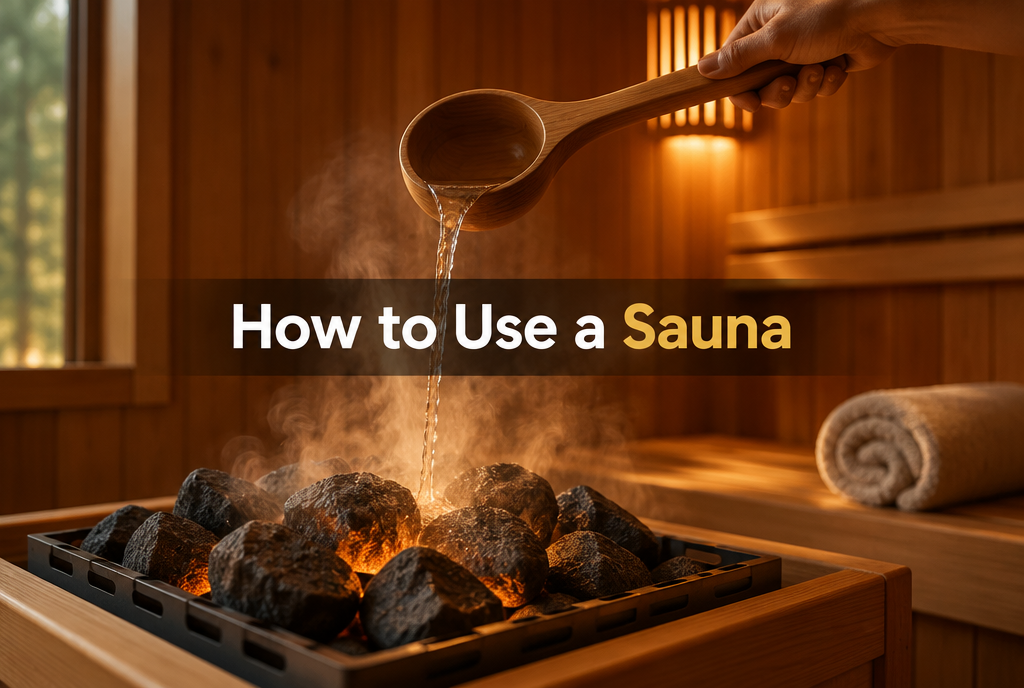
Yes, and it is one of the best parts. Ladling water over hot rocks creates löyly, the burst of steam that lifts the humidity and makes the heat feel fuller and rounder on your skin. A dry room feels sharp and toasty. Add löyly and the same temperature feels softer and more enveloping, and your breathing opens up. If you want the full background, we wrote a whole piece on what löyly is and how to use it.
Here is the maker note. The most common beginner mistake we see is dumping a full ladle all at once. That floods the rocks, drops their surface temperature, and turns the room muggy instead of giving you a clean rush of steam. Pour a little at a time, a half ladle over the rocks, wait, then add more. In our barrel saunas the round wall lets that steam roll up and over you rather than hanging flat, which is part of why a barrel feels so lively the moment you throw water.
How do you cool down between rounds
Cooling down is not optional, it is half the practice. Step out into fresh air, take a cool or cold shower, or if you have one, dip into cold water. Give yourself five to ten minutes until your heart rate settles and your skin feels cool to the touch. That swing from hot to cool is what leaves you feeling clear headed and refreshed. Plenty of our owners pair the heat with a plunge, and we walk through that contrast in our sauna and cold plunge routine. Even a garden hose or a cold cloth on the back of the neck does the job if you are keeping it simple.
How much water should you drink around a sauna
Plan on drinking before, between, and after your rounds. A good rule of thumb is a glass of water before you start, another glass for each round you do, and more once you finish. You sweat heavily in the heat, and the CDC notes that water helps your body keep a normal temperature and fend off dehydration, with needs rising when you are hot or active. If you sauna often or sweat a lot, a pinch of electrolytes helps you hold onto that fluid instead of flushing it. On the safety side, sauna bathing has a strong track record. A peer reviewed cohort study reports that regular sauna use is safe for most adults, including many people with stable heart conditions, though anyone with a heart concern or who is pregnant should check with their own doctor first. Listen to your body and step out if you feel dizzy or unwell.
Is it better to sauna before or after a workout
Both work, and it comes down to what you want. A short warm session before training can loosen tight muscles and get you moving, but keep it brief so you are not fatigued or dehydrated before you even start. Most people we talk to prefer the sauna after a workout, when the heat feels earned, helps them wind down, and eases stiff muscles. The one rule either way is to rehydrate first if you have been sweating hard, and leave a little gap between the two so you are not stacking two big heat and effort loads back to back.
Once the rhythm feels natural, the room itself is what turns a habit into a ritual. We build every barrel and cabin sauna at Northern Lights Cedar Barrel Saunas from clear cedar, and if you are weighing whether the investment fits your home, our pillar guide on whether a home sauna is worth it lays out the full picture next to an honest look at what a barrel sauna costs. When you are ready, browse our barrel sauna kits or see current sauna pricing, then call us at 1-800-759-8990 and we will help you match the right sauna heater size to your space.
Frequently asked questions
Can you use a sauna every day
For most healthy adults, yes. Daily short sessions are common and generally well tolerated as long as you hydrate and keep the rounds reasonable. Start with a few sessions a week and build up as your body adapts. Our guide on how often you should use a sauna covers a sensible weekly cadence in more detail.
Do you need to shower before getting in a sauna
A quick rinse before you get in is good practice. It washes off lotions, oils, and sweat that would otherwise bake onto the benches, and it leaves your skin ready to sweat cleanly. It only takes a minute, and it keeps a shared room pleasant and the cedar looking new for far longer.
How long after eating should you wait to use a sauna
Give a heavy meal a couple of hours before you sit in the heat. A full stomach plus high heat can leave you sluggish or queasy, and it pulls blood toward digestion right when your body wants to cool itself. A light snack beforehand is fine if you would rather not go in hungry.
Can you bring your phone into a sauna
We would leave it outside. Sauna heat sits well above what most phones are rated for, and the humidity from water on the rocks does electronics no favors. Part of the point is unplugging anyway. A simple sand timer or the clock on the wall is all you really need to track your rounds.
What are the signs you have stayed in a sauna too long
Step out if you feel dizzy, nauseous, headachy, or your heart is pounding in a way that does not ease off. Those are your body asking for cooler air and water. There is no prize for toughing it out. Ending a round a little early and cooling down beats pushing past what feels good.
Is an infrared sauna used the same way as a traditional sauna
The rhythm is similar, hydrate, warm up, cool down, repeat, but an infrared cabin runs cooler, often around 120 to 140 F, and warms you more slowly through direct radiant heat. Sessions tend to run a little longer. You also cannot throw water for löyly, since infrared rooms are dry by design.
Can beginners handle a barrel sauna
Absolutely. A barrel is a friendly first sauna. The rounded shape heats quickly and evenly, and the lower bench gives newcomers a gentler seat while they learn their tolerance. Start cool, keep early rounds short, and move up to the top bench once the heat feels comfortable rather than on day one.