
Enhancing Your Sauna Experience with Water: A Complete Guide to Using Water on Electric Sauna Heaters
If you have ever stepped into a traditional sauna, you know that the experience is defined by heat. But there is a secret element that transforms a basic sweat session into a truly transcendent wellness ritual: water. Adding water to a sauna heater is an age-old practice that many sauna enthusiasts swear by. It enhances the sauna experience by introducing a steamy, humid heat that offers a refreshing, invigorating, and deeply cleansing feeling.
However, for new sauna owners, the idea of pouring a liquid over an electrical appliance can seem counterintuitive—even dangerous. Contrary to common misconceptions, traditional electric sauna heaters are specifically engineered to safely accommodate water being poured over the rocks, allowing the user to generate steam and increase ambient humidity.
The debate among bathers usually centers around whether they prefer the intense bite of dry heat or the enveloping, soothing embrace of a humid environment. In this comprehensive guide, we will explore the safety mechanics, the proven health benefits, the science of sauna steam, and the best practices for using water on your electric sauna heater.
The Myth of Water and Electric Sauna Heaters
A common myth that persists in the wellness community is the belief that using water on an electric sauna heater can cause a dangerous electrical shock or short-circuit the system. This is simply not the case for traditional sauna setups.
Modern electric sauna heaters are meticulously designed with rigorous safety features. The electrical heating elements (the metal coils) are housed beneath or within a dense bed of sauna stones. These elements are heavily insulated and sealed to ensure that when water comes into contact with the heated rocks—and inevitably the coils—there is absolutely no risk of electrical shock to the user.
It is important, however, to distinguish between a traditional electric sauna and an infrared sauna. Infrared saunas use light panels to heat the body directly rather than heating the air. You must never pour water inside an infrared sauna, as their electrical components are not designed for moisture and doing so will damage the panels and create a safety hazard.
You might sometimes see warning signs in commercial hotels or public sauna facilities explicitly forbidding water on the rocks. This is almost always a preventative measure set by management to stop guests from flooding the heater, damaging the walls, or creating slip hazards due to poor drainage—not because the heater itself will electrocute anyone. Rest assured, in your home sauna, when operated properly, pouring water on the rocks poses no electrical danger.
The Science of Steam: Understanding “Löyly”
To truly appreciate the act of pouring water on sauna rocks, one must look to the birthplace of sauna culture: Finland. In Finnish, there is a specific word for the steam that rises from the heated rocks after water is thrown on them: Löyly (pronounced loo-loo).
Löyly is considered the spirit or breath of the sauna. When you pour water onto rocks that have been heated to temperatures exceeding 150°F to 190°F (65°C to 88°C), the water vaporizes instantly. This rapid phase change creates a sudden burst of humidity.
Scientifically, adding moisture to the air changes the specific heat capacity of the sauna environment. Water vapor holds heat far more efficiently than dry air. When this humid air makes contact with your skin, it condenses slightly, transferring its thermal energy directly to your body. This is why the sauna suddenly feels significantly hotter the moment the steam hits you, even though the ambient temperature recorded by your thermometer hasn’t actually increased. In fact, pouring water actually lowers the temperature of the rocks temporarily, but the perceived heat index spikes dramatically.
Dry Sauna vs. Wet Sauna: Why Use Water?
When you turn on your electric heater without adding water, you are experiencing a dry sauna. Dry saunas typically boast high temperatures (often approaching 190°F) and extremely low humidity (around 5% to 15%). While some prefer this intense, arid environment, introducing water shifts the dynamic completely, creating what is colloquially known as a “wet sauna.”
The Health Benefits of Sauna Steam
Choosing to add water isn’t just about making the room feel hotter; it unlocks a specific set of physiological benefits:
- Enhanced Sweating and Detoxification: The sudden wave of humidity prevents your sweat from evaporating quickly. This raises your core body temperature faster, prompting your body to sweat more profusely. This deep sweat is excellent for flushing out impurities from the skin.
- Respiratory Relief: Breathing in dry, hot air can sometimes irritate the mucous membranes in the nose and throat. The steam generated from the rocks moistens the airways, acting as a natural expectorant. It can help loosen congestion, soothe sore throats, and provide relief for mild asthma or allergy symptoms.
- Deeper Muscle Relaxation: The enveloping nature of humid heat penetrates deep into muscle tissues, promoting vasodilation (the widening of blood vessels). This increased blood flow delivers oxygen-rich blood to tired muscles, accelerating recovery after heavy physical exertion.
- Skin Hydration: While dry heat can sometimes pull moisture from the skin, a steamy sauna environment opens the pores and helps condition the dermal layer, leaving your skin feeling soft and rejuvenated post-shower.
If you want to compare these effects against other thermal therapies, you can read our detailed breakdown on the differences between a sauna and a steam room.
Best Practices: How to Safely Pour Water on Your Sauna Heater
If you’ve decided to add water to your sauna heater to enjoy the benefits of Löyly, it is crucial to do so correctly. Improper technique can lead to a subpar experience, potential burns, or premature wear on your equipment. Follow these expert guidelines:
1. Always Use a Traditional Sauna Ladle
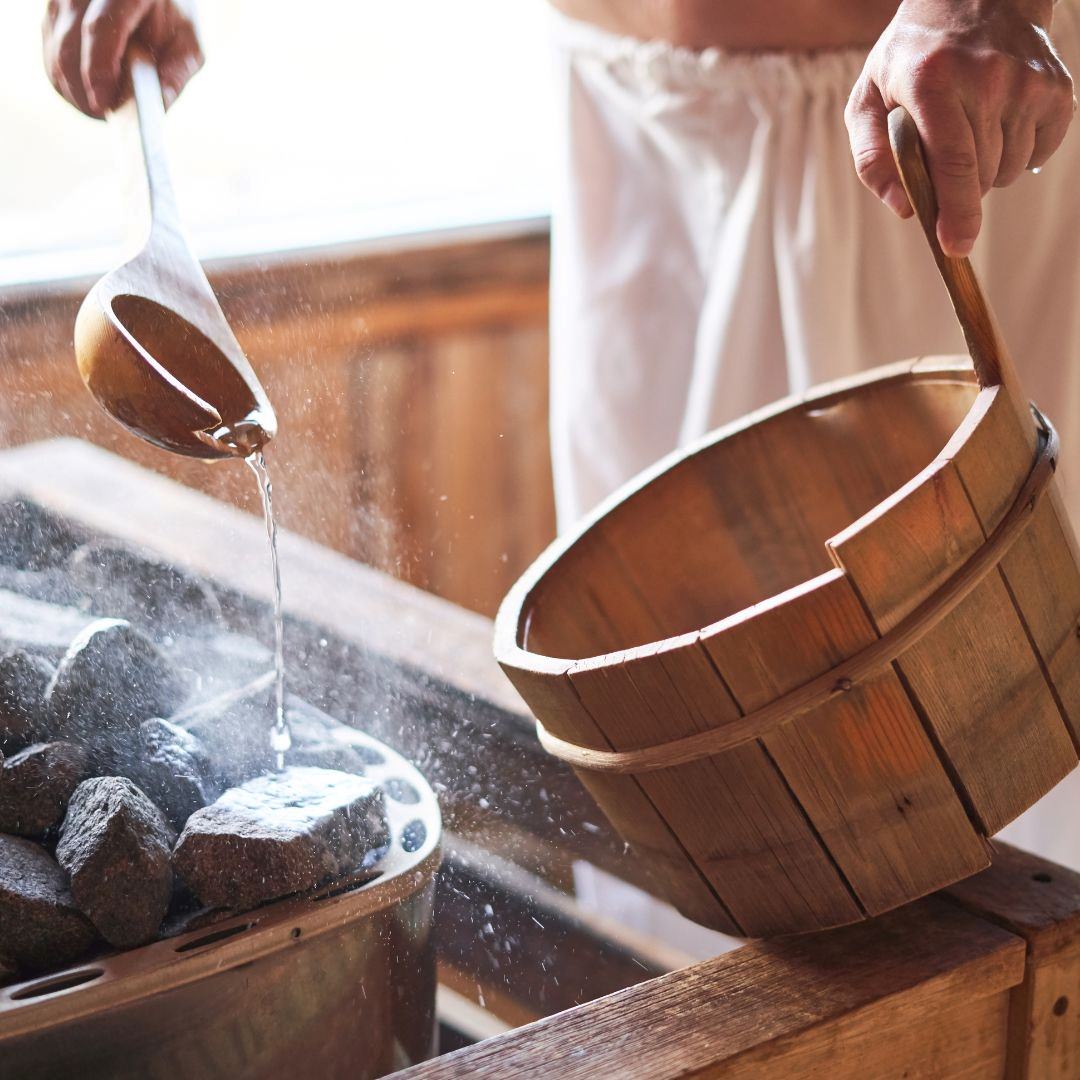
Never pour water directly from a water bottle or dump it from a bucket. Always use a dedicated sauna bucket & sauna ladle. A ladle is designed with a long handle to keep your hands and arms safely away from the sudden burst of scalding steam. Furthermore, the cup of the ladle measures out the perfect amount of water.
2. The “Drizzle” Technique
The biggest mistake beginners make is dumping a large volume of water onto the rocks all at once. This rapidly cools the stones, flooding the heater elements and pooling water at the bottom of the heater. Instead, you should gently drizzle or sprinkle the water evenly across the top of the rocks. You want to hear a sharp, crisp “hiss” as the water vaporizes instantly. If you hear a bubbling or boiling sound, you have poured too much, and the water has bypassed the rocks and hit the heating coils directly.
3. Watch Out for Steam Burns
Steam expands rapidly. When you pour water, keep your face and body leaned back. Do not stand directly over the heater. The steam generated from the rocks is at boiling temperature when it first rises and can cause severe burns if you are caught in its direct path.
4. Check for Proper Ventilation and Drainage
Steam requires adequate airflow to distribute evenly and comfortably throughout the room. Ensure your sauna has proper ventilation—typically an intake vent near the heater and an exhaust vent on the opposite wall. If you plan to use a lot of water, your home or outdoor sauna should ideally have a floor drain. Water that misses the rocks needs a place to go; otherwise, it can pool on the floor, creating a slip hazard and potentially warping the wood over time. This is particularly crucial in high-traffic commercial saunas.
The Importance of Water Quality
Not all water is created equal, especially when it comes to your sauna heater. The type of water you use directly impacts the lifespan of your heating elements and the quality of the air you breathe.
- Tap Water: While convenient, tap water often contains high levels of minerals like calcium, magnesium, and chlorine. When this water vaporizes on the rocks, the minerals are left behind. Over time, this creates a white, chalky scale buildup on your rocks and heating elements. This scale insulates the heat, forcing the elements to work harder and eventually leading to premature failure.
- Distilled or Filtered Water: This is the gold standard for sauna use. Distilled water is free of minerals and impurities. It vaporizes cleanly, leaving no residue behind, which drastically extends the life of your sauna rocks and electrical coils.
- Pool or Spa Water: Never use water taken from a swimming pool or hot tub. The chlorine, bromine, and chemical sanitizers will vaporize into a toxic, highly corrosive gas that is incredibly dangerous to inhale and will rust your heater elements almost immediately.
Elevating the Experience: Aromatherapy and Sauna Whisks
Once you have mastered the art of creating steam, you can take your sauna ritual to the next level by introducing aromatherapy. Adding just a few drops of pure essential oils—such as eucalyptus, birch, pine, or citrus—into your sauna bucket (never directly onto the rocks) infuses the steam with therapeutic scents.
Eucalyptus, in particular, is famous for its ability to clear nasal passages and invigorate the senses. When the scented water hits the rocks, the aroma permeates the entire cabin, offering profound mental relaxation and stress relief.
Another incredible way to utilize water in the sauna is through the use of a Vihta or Vasta. A Vihta is a bundle of fresh birch branches bound together. Bathers soak the whisk in warm water and gently slap it against their skin. This traditional Finnish practice stimulates blood circulation, acts as a natural exfoliant, and releases a wonderful, earthy forest aroma into the humid air. You can learn more about this fascinating tradition in our complete guide on what a sauna whisk is and how to use it.
Sauna Rocks: The Unsung Heroes of Steam
Your electric heater is only as good as the rocks that sit on top of it. The stones act as the thermal battery for your sauna. They absorb the heat from the electric coils and store it. When water is poured, it is the rocks—not the coils—that vaporize the liquid.
You cannot use just any rocks from your garden. Standard river rocks or sedimentary stones can contain trapped moisture; when heated, they can crack, explode, or shatter, creating a massive safety hazard. Sauna stones must be dense, igneous rocks like peridotite, vulcanite, or olivine diabase. These rocks have a high specific heat capacity and can withstand extreme temperature fluctuations without breaking down.
Over time, due to the constant expansion and contraction from heating and water cooling, sauna rocks will naturally degrade, crack, and crumble. When rocks crumble, they compact together, blocking the airflow around the heating elements. This causes the heater to overheat and can fry the coils.
As a general rule of thumb, you should inspect and wash your sauna stones annually. If you notice them crumbling or splitting, it is time to invest in replacement sauna rocks to keep your heater running efficiently and your steam quality high.
Essential Sauna Accessories for a Wet Sauna
To safely and enjoyably use water in your sauna, having the right sauna accessories is vital.
- Wooden Buckets with Liners: A traditional cedar or pine bucket looks beautiful but can leak if the wood dries out. Always opt for a wooden bucket that includes a stainless steel or plastic inner liner. This prevents leaking and makes it much easier to clean.
- Long-Handled Ladles: Whether crafted from wood, stainless steel, or aluminum, the ladle must have a long handle to protect your arm from steam burns.
- Hygrometer: While a thermometer measures heat, a hygrometer measures humidity. Having a combined thermometer/hygrometer allows you to monitor the exact climate of your room and adjust your water usage accordingly.
Maintenance: Prolonging Your Heater’s Lifespan
While using water on a sauna heater elevates the experience, it does require a bit of upkeep. The constant exposure to moisture, combined with the extreme heat, means your heater needs regular attention to prevent premature failure.
1. Preventing Scale Buildup: As mentioned earlier, hard water leaves calcium deposits. If you notice white, crusty buildup on your rocks or the metal casing of your heater, you need to clean it. Once the heater is completely cool and unplugged, you can remove the rocks and scrub the casing with a mild sauna cleaner or a diluted water-and-vinegar solution.
2. Inspecting the Heating Elements: Once a year, remove all the rocks from the heater. Inspect the metal coils. If they appear warped, blistered, or heavily rusted, they may need replacing. Carefully placing the rocks back into the heater—ensuring they are placed loosely to allow air to flow between them—is the best way to protect these elements.
3. Airing Out the Sauna: After your session is over, do not immediately shut the sauna door tight. Leave the heater on for an additional 10 to 15 minutes to allow the remaining moisture to evaporate completely. Prop the door open slightly. A dry sauna is a clean sauna; leaving standing moisture in the room invites mold and mildew into the wood. For more detailed upkeep tips, check out our guide on how to maintain your sauna room.
Conclusion
Using water on an electric sauna heater is not only perfectly safe, but it is also an integral part of the authentic sauna tradition. By introducing Löyly—the spirit of the sauna—you transform a dry, hot room into a dynamic, humid environment that promotes deeper sweating, respiratory relief, and profound relaxation.
It ultimately comes down to personal preference. Whether you prefer the sharp bite of dry heat or the enveloping comfort of steam, your electric sauna heater is designed to handle both. As long as you utilize the correct techniques—pouring slowly, using the right rocks, ensuring proper ventilation, and using clean water—you can enjoy a lifetime of incredibly soothing, humid sauna sessions without worrying about damaging your equipment.
Always respect the environment, listen to the sizzle of the stones, and take the time to maintain your heater. By doing so, you ensure that every sauna session is just as rejuvenating as the last.
Frequently Asked Questions (FAQs)
No. You must wait for the sauna stones to fully heat up before pouring water. If the stones are cold, the water will simply run straight through them, hitting the electrical coils and pooling at the bottom of the heater. Wait until the room has reached your desired temperature (usually 30 to 45 minutes) before generating steam.
Less is more. Start with a quarter or half of a ladle (about 2 to 4 ounces). Pour it slowly. You want the water to vaporize instantly on the top layer of rocks. If you dump a whole bucket, you will flood the heater, severely drop the room temperature, and potentially damage the elements.
A loud hiss or sizzle is perfectly normal. However, if you hear loud cracking or popping sounds coming from the rocks themselves, it means your stones are fracturing due to thermal shock. This is a sign that your rocks are degrading and need to be replaced.
Absolutely not. Salt is highly corrosive. Vaporizing salt water will cause rapid and severe rusting of the stainless steel elements and the heater casing, ruining your equipment in a very short amount of time.
A musty smell indicates one of two things: either your water bucket and ladle haven’t been cleaned and are harboring bacteria, or your sauna room lacks proper ventilation, allowing mold to grow in the wood. Ensure you are airing out the sauna completely after every use and regularly scrubbing your accessories.
Not at all. The use of water is entirely optional. If you prefer the intense, arid feeling of a traditional dry sauna, you can simply run the electric heater without ever touching a ladle.