
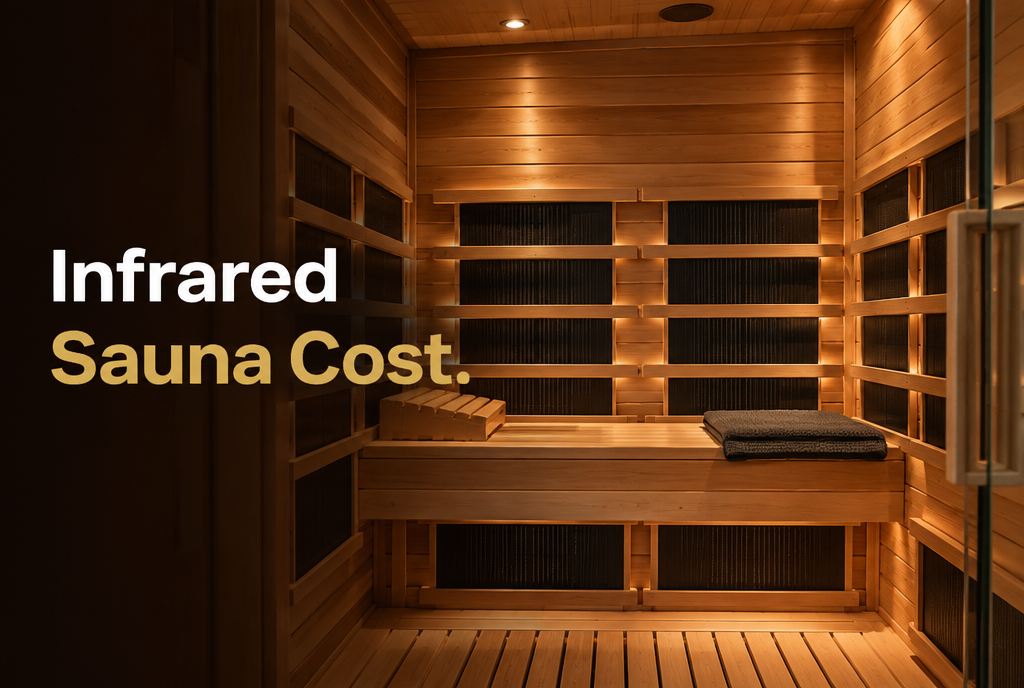
Most home infrared saunas cost between about $1,500 and $15,000, and the bulk of two to four person models land near $2,300 to $8,500 once installed. Price tracks size first, then wood grade, heater type, and features. At Northern Lights Cedar Barrel Saunas we build and sell these units, so below we lay out real 2026 ranges, what they cost to run, and how buying stacks up against a studio.
How much does an infrared sauna cost
An infrared sauna costs anywhere from roughly $1,500 for a compact one person cabin to $15,000 and up for a large premium build. The wide spread is normal, because the same category covers a plug-in box for a spare bedroom and a full-spectrum cabin wired to its own circuit. For a quick orientation, here is how the market breaks down by size in 2026. These are researched market ranges, so check live figures on our affordable sauna prices page before you budget.
| Size | Typical new price range | What that usually buys |
|---|---|---|
| 1 to 2 person | $1,500 to $4,500 | A compact far infrared cabin, often plug-in, with basic wood and simple controls |
| 3 to 4 person | $3,500 to $8,000 | More panels, a larger footprint, full-spectrum options, and usually a dedicated circuit |
| Cabin and premium | $6,000 to $15,000 and up | Bigger builds, thicker clear cedar, full-spectrum arrays, plus extras like chromotherapy and audio |
Two things move a unit within its band. One is heat type, since a full-spectrum sauna that adds near and mid infrared runs higher than a far infrared only cabin. The other is build quality, which is where the cheap boxes and the saunas that last part ways. If you are still deciding between heat systems, our explainer on what is an infrared sauna covers the bands in plain terms.
How much is a 2 person infrared sauna
A 2 person infrared sauna usually costs between about $2,500 and $4,500 for a solid far infrared model, and $6,000 to $9,000 once you move up to a full-spectrum unit with premium wood and finishes. This size is the most popular for a reason. It fits a garage corner, a basement, or a covered patio, seats a couple comfortably, and often runs on a standard outlet at the lower end. If you want the round cedar look instead of a box, compare the two formats in our piece on infrared sauna vs traditional sauna.
Are infrared saunas expensive
Infrared saunas are not cheap, but they are one of the more affordable ways to get regular heat therapy at home compared with a traditional wood-fired or electric build that needs a heater, rocks, and often more clearance. Cost feels different once you weigh it against use. A peer reviewed review of sauna bathing and heart health links regular sauna use with lower blood pressure and better vascular function, which is the kind of routine benefit that makes a fixed cost easier to justify. Spread a $4,000 sauna across years of near-daily sessions and the per-use cost drops fast, which is the math we walk through further down.
How much is a home infrared sauna
A home infrared sauna most often lands between $2,300 and $8,500 installed, with the average buyer sitting near $4,000 to $4,500 for a two to three person cabin. Where you fall depends on three choices. Size sets the floor, heat type sets the middle, and extras like a full glass front, chromotherapy lighting, and a sound system set the ceiling. Panel count matters too, because a bigger cabin needs more emitters to surround the body properly. Our guide to calculating the number of infrared panels shows how that scales with size, and it is a big part of why a 4 person unit costs more than twice a 2 person one.
How much does it cost to run an infrared sauna
Running an infrared sauna is cheap, usually well under a dollar per session. Infrared cabins draw about 1.6 to 3 kilowatts depending on size, and they warm you directly instead of heating a whole room of air, so a 40 to 45 minute session pulls only a couple of kilowatt-hours. At the U.S. average residential rate of about 18 cents per kilowatt-hour, published in the U.S. Energy Information Administration average electricity price by state, a two person session costs roughly 20 to 30 cents and a large cabin around 40 cents. Rates vary widely by state, from the low teens to over 50 cents in Hawaii, so your number moves with where you live. Four sessions a week works out to only a few dollars a month for most homes. For the full breakdown across sauna types, see how much it costs to run a sauna every month.
Does an infrared sauna pay back a studio membership
This is where a home unit earns its keep. Infrared studio sessions run about $25 to $60 each, and unlimited memberships sit around $120 to $200 a month in most cities. Buy once, and every session after payback is close to free. The table below compares a mid-range 2 person sauna at about $4,500, plus roughly $100 a year in electricity, against a $150 a month studio membership.
| Time | Studio membership (about $150 a month) | Home infrared sauna (about $4,500 plus power) | Where you stand |
|---|---|---|---|
| 1 year | $1,800 | $4,600 | The studio is about $2,800 cheaper |
| 2 years | $3,600 | $4,700 | The studio is still about $1,100 cheaper |
| 3 years | $5,400 | $4,800 | The home sauna pulls ahead by about $600 |
For a typical membership and a mid-range unit, the sauna pays for itself a little before the three year mark, and sooner if you go more often, share it with family, or face pricier studio rates. Heavier users cross over inside two years. If you want the wider picture on whether the spend makes sense, our pillar on whether a home sauna is worth it weighs the honest pros, cons, and real return.
Why do infrared sauna prices vary so much
The gap between a $1,700 box and an $11,000 cabin comes down to materials, heaters, and wiring, and this is where our workshop experience shows. In the barrels we build we use clear western red cedar with thicker staves, which holds heat and resists warping far better than the thin knotty panels and glued veneers on budget infrared boxes, and that grade of wood is a real cost the cheap units skip. The second driver is the heater array. Stepping from a 2 person to a 4 person cabin is not just more wood, it is more emitters and a heavier circuit, which is why the price more than doubles rather than scaling by seat.
The third driver hides in the install. The most common mistake we see is someone setting a large infrared cabin on a shared 15 amp household outlet and then wondering why the breaker keeps tripping. Any fixed heater above roughly 1.5 kilowatts is treated as a continuous load and usually wants its own dedicated circuit, a point spelled out under Article 424 of the National Electrical Code (NFPA 70). Outdoors, the other frequent slip is pad prep, since a cabin set straight on grass or on pavers that pool water will cup its floor within a season. One more thing we notice as makers, a clear cedar barrel with a good heater is comfortable in well under an hour where a boxy cabin with more air to warm takes longer, and an infrared cabin sidesteps most of that wait because it heats the body, not the room. For the wiring and breaker specifics, our guide to sauna electrical requirements lays out what you actually need.
Once you have settled on a size and a heat type, browse our infrared saunas or check live numbers on our affordable sauna prices page, and if you would rather talk it through, call us at Northern Lights Cedar Barrel Saunas on 1-800-759-8990 and we will confirm the heater and the dedicated circuit your build needs.
Frequently asked questions
Can you finance an infrared sauna
Yes, most infrared saunas can be financed, which turns a $3,000 to $8,000 purchase into monthly payments that often sit near the cost of a studio membership. Some units are also HSA or FSA eligible, saving pre-tax dollars. Our guide to financing an outdoor sauna walks through the numbers first.
Do infrared saunas need a dedicated electrical circuit
Infrared saunas above roughly 1.5 kilowatts usually need their own dedicated circuit rather than a shared household outlet, because a fixed heater counts as a continuous load. Smaller plug-in cabins run fine on a standard 120 volt outlet. Our rundown of sauna electrical requirements covers the breaker and wiring details.
How long does an infrared sauna last
An infrared sauna typically lasts ten to twenty years or more when it is kept dry and wiped down simply. Carbon and ceramic heating panels outlive most other parts, and solid cedar cabinets age gracefully. The cheaper particleboard boxes and glued veneers are the pieces that tend to fail first, which is where build quality earns its price.
Is a full spectrum infrared sauna worth the extra cost
A full-spectrum infrared sauna, which adds near and mid infrared to the far infrared band, costs more than a far infrared only cabin but covers a wider range of uses. If your main goal is a relaxing daily sweat, a far infrared unit is plenty. See what is an infrared sauna for the differences between bands.
What is the cheapest way to get an infrared sauna at home
The cheapest way to get an infrared sauna at home is a one or two person plug-in cabin, which starts near $1,500 and runs on a standard outlet with no electrician needed. Portable infrared blankets cost even less but seat one person lying down. Compare live entry prices on our affordable sauna prices page.
Are infrared saunas cheaper to run than traditional saunas
Infrared saunas are usually cheaper to run than traditional saunas, because they operate at lower power and heat you directly instead of warming a full room of air. A typical home session costs well under a dollar. Our breakdown of what it costs to run a sauna every month has the full math.
How many infrared panels does a sauna need
The number of infrared panels a sauna needs depends on cabin size and seating, since panels should surround the body at the back, sides, and calves. A two person cabin commonly uses six to eight emitters. Our guide to calculating the number of infrared panels shows how to size them.
Do infrared saunas add value when selling a home
Infrared saunas are usually treated as personal property rather than a fixed upgrade, so they do not carry a set resale figure. Industry estimates suggest a clean, well-installed sauna can add to a home’s appeal for wellness-minded buyers. A freestanding unit can also move with you if you decide to sell.