Financing as Low as 0% APR on Approved Credit. Find out More.
Terms and conditions apply. See details here.


A sauna door is far more than a way in and out: it seals the heat inside, sets the look of the sauna and, because it is the one moving part you use every session, it is often the first thing to fail on a poorly built sauna. A great door keeps your sauna hot and efficient, stands up to years of heat and humidity, and looks like it belongs. A weak one leaks heat, sticks or sags, and quickly starts to look shabby. This guide covers exactly what to look for in a quality sauna door, from the hardware and glass to the wood and insulation, so you choose one that lasts.

The door does the hardest job in the sauna. It is the only part that opens and closes every time you use the room, so it takes constant mechanical stress, and it forms the largest single break in the insulated shell that keeps the heat in. A door that fits poorly or is badly built lets warm, humid air escape, which makes the heater work harder, drives up running costs and, for an indoor sauna, can push moisture into your home where it can damage walls and furniture. A good door does the opposite: it seals tightly, holds the heat and humidity where they belong, and swings smoothly for years. When you are comparing saunas, inspect the door closely, because it tells you a great deal about the overall build quality.
Five things separate a quality sauna door from a cheap one. Look for all of them:
Each of these deserves a closer look, because a shortcut in any one of them shortens the life of the sauna or spoils the experience.
| Feature | Look for | Avoid |
|---|---|---|
| Hardware | Corrosion-resistant brass hinges and handle | Cheap plated metal that seizes or corrodes |
| Glass | Tempered safety glass, optional tint | Ordinary glass that can crack in heat |
| Wood | Clear Western red cedar to match the sauna | Painted or mismatched panels |
| Seal | Insulated frame with a snug weather seal | Loose fit with visible edge gaps |
| Latch | Push-to-open, never locks from inside | Any latch that can trap an occupant |
Quality hinges are non-negotiable. The hardware on a sauna door has to survive frequent opening and closing while enduring high heat and constant swings in humidity, conditions that quickly corrode or seize cheap metal. Look for corrosion-resistant hinges and a handle that stays comfortable to touch and easy to operate even when the sauna is hot. At Northern Lights we fit our doors with real brass hardware, which resists corrosion, ages gracefully and gives a solid, quality feel every time you use it. Poor hardware, by contrast, loosens and lets the door sag out of alignment, which creates gaps that leak heat and start to look old and dingy fast. The handle matters for safety too: it should open with a simple push and never rely on a latch that could trap someone inside.
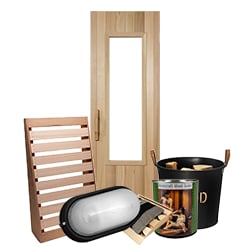
Many people want a window in the sauna door, and for good reason. A glass panel lets in natural light, makes a small room feel more open, and lets you see whether someone is already inside before you open up. If you choose a door with glass, insist on tempered safety glass rated for high heat: ordinary glass can crack or shatter under the thermal stress of a sauna, which is a real hazard. Tinted or frosted glass is a popular option that lets light through while preserving privacy. Some owners go further with a full glass front for a bright, modern look. Our insulated cedar sauna door with a window pairs a tempered glass panel with a properly insulated cedar frame, giving you the light without sacrificing the seal.
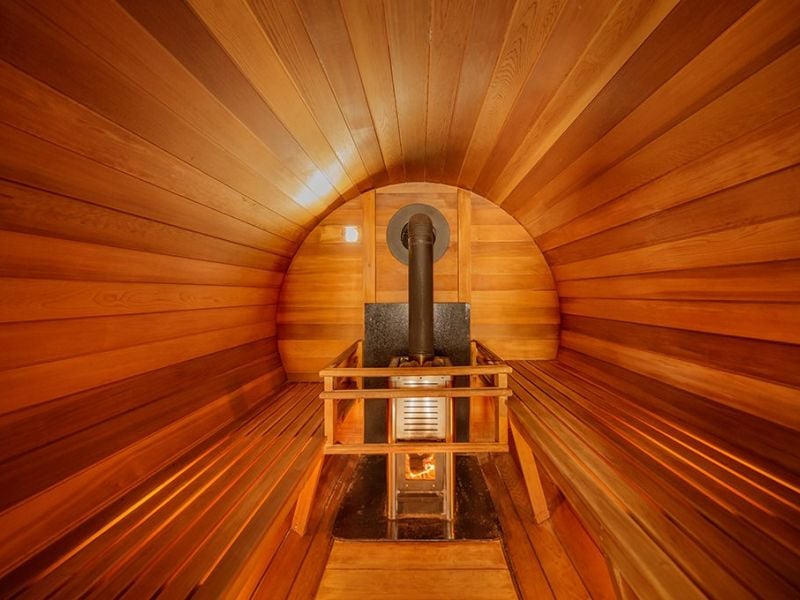
A sauna door should look like it belongs, not stand out like a bright white slab against the warm cedar staves. Beyond looks, the wood in the door faces the same punishing heat-and-humidity cycle as the rest of the sauna, so it needs to stay stable rather than warp, swell or crack, which would break the seal. Clear Western red cedar is the ideal choice on both counts: it matches the sauna beautifully, it stays dimensionally stable through repeated heating and cooling, and its natural oils resist rot and decay. It also stays cooler to the touch than denser woods, which matters for a surface you handle constantly. For the full explanation of why this wood outperforms the alternatives, read why cedar is the best choice for saunas. A matched cedar door is one of the details that makes a handcrafted sauna feel finished.
Above everything else, a sauna door has to trap heat and humidity inside the room. This is where insulation and a tight seal earn their keep. A well-built, insulated door keeps the warmth where it belongs so the heater is not fighting a constant leak, which means faster warm-ups, steadier temperatures and lower running costs. For an indoor sauna, a good seal is doubly important, because escaping heat and moisture can damage the surrounding walls, flooring and furniture over time. Even an outdoor sauna needs a properly insulated door to hold its heat, especially in cold climates where an air gap can noticeably slow the warm-up. When you inspect a door, check that it closes snugly against a weather seal with no visible gaps at the edges; that snug fit is the difference between an efficient sauna and one that never quite gets hot enough.
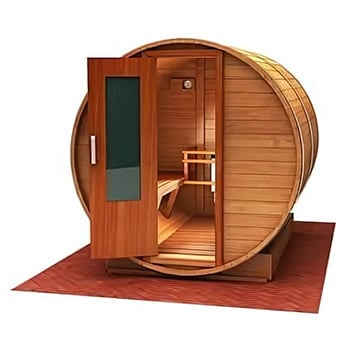
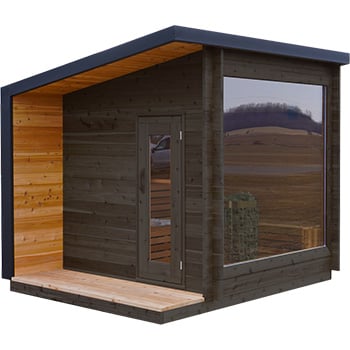
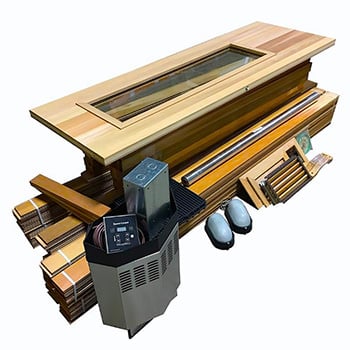
The door style depends on the sauna. A cedar barrel sauna uses a door shaped to fit its rounded front, often with a large glass panel that makes a striking, modern statement and shows off the interior. A cabin or outdoor cabin sauna uses a more conventional rectangular door that can be solid cedar, part glass or full glass. Both should meet the same standards: tempered glass, corrosion-resistant hardware, matched cedar and a tight, insulated seal. If you are building your own room, our DIY sauna kits and indoor sauna options include doors designed to seal properly for the specific style, so you are not left trying to source a door that fits and performs.
If you are replacing a door or planning a build, accurate measurements matter as much as the door itself, because even a well-made door leaks heat if it does not fit the opening. Measure the width and height of the rough opening in several places, since older frames are rarely perfectly square, and use the smallest reading so the door is not forced. Note the wall thickness, which affects the jamb depth, and check which way you want the door to swing, remembering that a sauna door must open outward. If your sauna has a curved barrel front, the door and its frame are shaped to that curve, so a standard flat door will not seal; you need a door matched to the barrel. When in doubt, share your measurements and sauna type with the supplier before ordering. Getting the fit right the first time saves the frustration of a door that binds, sags or leaks.
A few avoidable mistakes account for most door problems. The first is choosing a door for looks alone and ignoring the seal, which leaves you with a beautiful door that never lets the sauna get properly hot. The second is fitting ordinary glass instead of tempered safety glass, a genuine safety hazard under sauna heat. The third is using indoor or general-purpose hardware that corrodes quickly in the humid environment, so the door soon sags and leaks. The fourth is installing a latch or lock that can trap someone inside, which no sauna door should ever have. The last is forcing a flat door onto a curved barrel opening, where it can never seal. Steer clear of these and you steer toward a door that performs. The simplest safeguard is to buy the door as part of a sauna built to fit it, so every one of these details is handled for you.
A quality cedar sauna door needs very little maintenance, but a small routine keeps it working like new. Wipe the glass down occasionally to keep it clear, and check the hinges and handle once or twice a year to make sure everything is tight and moving freely; brass hardware may just need an occasional wipe. Inspect the seal around the edges and confirm the door still closes snugly, since a seal that has flattened or a hinge that has loosened is the usual cause of new heat leaks. Let the sauna air-dry with the door open after use so moisture does not linger in the frame. Because cedar resists rot naturally and good hardware is built for the environment, a well-made door will serve you reliably for the life of the sauna with just this light attention.
The easiest way to get a great door is to buy a sauna built around one. Northern Lights Cedar Saunas handcrafts cedar barrel saunas, outdoor saunas and DIY sauna kits from clear Western red cedar, each fitted with a properly insulated, tempered-glass door on solid brass hardware. That attention to the door is part of what lets our saunas hold their heat efficiently and deliver the full benefits of a sauna session after session. Whether you want the sculpted glass front of a barrel or the classic look of a cabin, starting with a quality door means starting with a sauna that stays hot, stays sealed and stays beautiful for years.
A sauna door should always open outward and never lock from the inside, so anyone can leave easily and safely. Most quality doors use a simple ball-catch or friction closure that holds the door shut but releases with a gentle push.
Yes. Any glass in a sauna door must be tempered safety glass rated for high heat. Ordinary glass can crack or shatter under the thermal stress of a sauna, which is a serious safety risk, so tempered glass is essential.
Yes. An insulated, well-sealed door traps heat and humidity inside, which keeps the sauna efficient and, for indoor saunas, protects the surrounding room from escaping moisture. A poor seal is one of the most common reasons a sauna struggles to reach temperature.
Often yes, provided you match the size, style and seal to your sauna. Because the door is critical to sealing and safety, choose a properly insulated cedar door with tempered glass and quality hardware, and confirm the dimensions before ordering.
Sauna doors are usually a little smaller than a standard house door to reduce heat loss, but they must still be easy to pass through safely. Match the door to your sauna's opening rather than a house standard, and for a barrel sauna use a door shaped to the curved front so it seals properly.
Heat loss around the door almost always comes from a worn seal, a loosened hinge that lets the door sag, or a door that was never insulated well in the first place. Check and tighten the hardware, inspect the weather seal, and confirm the door closes snugly with no visible edge gaps.
A good sauna door has corrosion-resistant hardware, tempered safety glass if it has a window, matched cedar, proper insulation with a snug seal, and a safe push-to-open design that never locks from the inside.
A quality sauna door is built from clear Western red cedar to match the room, fitted with tempered safety glass and corrosion-resistant hardware such as brass, over an insulated, sealed frame.
Many do. A tempered-glass panel lets in light and lets you see inside before opening. Any glass in a sauna door must be tempered safety glass rated for high heat, never ordinary glass.
A sauna door should open outward and never lock from the inside so anyone can leave quickly and safely. Most use a simple ball-catch that holds the door shut but releases with a gentle push.
A well-built door closes snugly against a weather seal with no visible edge gaps, on an insulated frame. If heat leaks, check for a worn seal or a loosened hinge letting the door sag out of alignment.
Northern Lights handcrafts cedar barrel saunas, outdoor saunas and DIY kits from clear Western red cedar, built for steady, comfortable heat that lasts for decades.
Shop Cedar Saunas
Looking for the perfect cedar sauna for your home? We’re here to help you find exactly what you need, from handcrafted cedar barrel saunas to outdoor saunas that promote relaxation and wellness. Whether you have questions about our products, installation, or need help with an order, our team is ready to assist.
Fill out the form, and we’ll get back to you as soon as possible to guide you toward a healthier lifestyle with the natural benefits of wood saunas.