
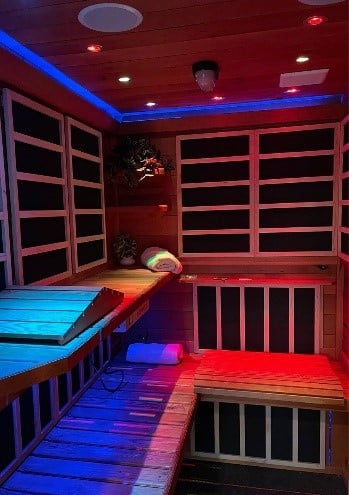
If you’ve been looking into the incredible health benefits of infrared therapy – from deep tissue detoxification to joint pain relief – you might have experienced sticker shock at the price of pre-built units. But here is the good news: building an infrared sauna at home is an incredibly rewarding project that can save you thousands of dollars while giving you a custom-fitted wellness retreat.
Whether you want to convert an unused closet or build a freestanding cabin in your basement, a DIY infrared sauna is completely achievable if you have basic carpentry skills and the right materials.
In this guide, we will walk you through exactly how to build your own infrared sauna, from calculating your panel needs to choosing the best cedar wood.
Why Build a Homemade Infrared Sauna?
Creating a homemade infrared sauna offers several distinct advantages over buying a generic, mass-produced box:
Custom Sizing: Fit the sauna exactly into your available space, whether that’s a tight bathroom corner or a large basement room.
Cost Savings: Sourcing your own lumber and buying an infrared heater kit is significantly cheaper than purchasing a fully assembled luxury unit.
Quality Control: You get to choose high-grade, non-toxic materials (like clear Western Red Cedar) instead of settling for the cheap, chemically treated woods often found in imported units.
Step 1: Planning and Sizing Your Space
The first step in any infrared sauna DIY project is planning the dimensions. Unlike traditional wood-fired or electric rock heaters that heat the ambient air, infrared panels heat your body directly.
Because of this, the placement of the panels is more important than the overall cubic footage of the room. You want the infrared emitters positioned so they directly target your back, front, and calves.
Standard Sizing: A comfortable 1-person sauna requires about 3′ x 3′ of floor space. For 2 people, aim for at least 4′ x 4′ or 4′ x 5′.
Ceiling Height: Keep the ceiling relatively low (around 6.5 to 7 feet). A lower ceiling keeps the heat contained and makes the space feel cozier.
Step 2: Framing and Insulation
Once you have your dimensions, it’s time to frame the walls using standard 2×4 studs.
Even though infrared saunas don’t reach the extreme ambient temperatures of traditional dry saunas, insulation is still critical. Proper insulation keeps the heat energy inside the cabin and prevents your electrical panels from overworking.
Fiberglass Insulation: Standard R-11 or R-13 fiberglass batts between the studs work perfectly.
Foil Vapor Barrier: Over the insulation, staple a reflective aluminum foil vapor barrier. This prevents moisture from reaching your drywall and reflects infrared heat back into the room. Never use plastic moisture barriers, as they can melt or off-gas toxic fumes when heated.
Step 3: Wiring for Your Infrared Panels
Before you put up your interior wood paneling, you need to run the electrical wiring.
Disclaimer: Unless you are a licensed electrician, you should hire a professional to run the dedicated circuits required for your sauna.
Depending on the size of your DIY infrared sauna kit, you will likely need a dedicated 110V or 220V circuit. Run the wires from your breaker box to the specific locations where your infrared panels will be mounted.
Step 4: Choosing the Right Wood (Interior Paneling)
The wood you choose for the interior of your sauna is crucial. It must be able to handle fluctuating temperatures without warping, shrinking, or secreting sap.
Western Red Cedar is universally considered the best wood for any sauna build.
Aromatic: It releases a naturally calming, earthy scent when warmed.
Durable: It is naturally resistant to decay, moisture, and mildew.
Cool to the Touch: Cedar has a low thermal conductivity, meaning the benches and walls won’t burn your bare skin.
Install your cedar tongue-and-groove boards horizontally or vertically over the foil vapor barrier. Secure them using a pneumatic nail gun with galvanized or stainless steel brad nails to prevent rusting.
Step 5: Selecting and Installing Infrared Panels
This is the heart of your build. When shopping for an infrared sauna kit, you generally have two choices for emitters:
Ceramic Heaters: These get very hot and emit focused, intense infrared heat.
Carbon Fiber Panels: These provide a softer, more even, and wider distribution of heat. Carbon panels are generally preferred for modern DIY builds because they cover more surface area and operate at a safer surface temperature.
How many panels do you need? A typical 2-person homemade sauna requires 5 to 6 panels: two on the back wall, one on each side wall, and one or two under the bench to target your calves. Mount the panels securely to your cedar walls according to the manufacturer’s specifications.
Step 6: Building Benches and Final Touches
For your seating, construct benches out of thick cedar boards (usually 2x4s or 1x4s spaced slightly apart for airflow). The bench should be about 18 to 20 inches high and 18 to 24 inches deep for maximum comfort.
Add a tempered glass door to keep the room from feeling claustrophobic. Finally, install any extras that came with your kit, such as a digital control keypad, chromotherapy (color) lighting, or Bluetooth speakers.
The Alternative: Buying a DIY Infrared Sauna Kit
If sourcing lumber, measuring vapor barriers, and cutting tongue-and-groove cedar sounds a bit too time-consuming, there is an easier middle ground.
A DIY infrared sauna kit from Northern Lights Cedar Saunas gives you the best of both worlds. These kits come with pre-cut, premium Western Red Cedar, perfectly sized carbon or ceramic heaters, and a complete set of assembly instructions. You get the satisfaction of building it yourself – often in just an afternoon – without the headache of acting as a general contractor.
Building an infrared sauna is an investment in your daily wellness. Whether you start from scratch with raw lumber or assemble a premium pre-cut kit, the result is a personal health sanctuary that you can enjoy for decades.
Frequently Asked Questions (FAQs)
Western Red Cedar is universally considered the best wood for any sauna build. It is naturally resistant to moisture, decay, and mildew. Additionally, it has low thermal conductivity, meaning it won’t burn your skin when things heat up, and it emits a soothing, earthy aroma.
Yes, in most cases. Depending on the size of your sauna and the number of carbon or ceramic heaters you use, you will likely need a dedicated 110V (15-20 amp) or 220V circuit to prevent tripping breakers. Always consult a licensed electrician for proper installation.
For most DIY projects, carbon fiber panels are preferred. They operate at a lower, safer surface temperature and provide a wider, more even distribution of infrared heat. Ceramic heaters get much hotter to the touch and provide focused heat, which can sometimes be uncomfortable in a small, homemade enclosure.
Absolutely! Since infrared saunas do not use water or generate steam, there is no risk of moisture damage or mold spreading to the rest of your house. Basements, garages, and unused closets make perfect spaces for an indoor infrared sauna.
Yes, sourcing your own framing lumber, insulation, and buying a DIY infrared sauna kit (which includes the panels and controls) is significantly more cost-effective than buying a fully assembled, pre-built luxury unit. Plus, you get a custom fit for your specific space.